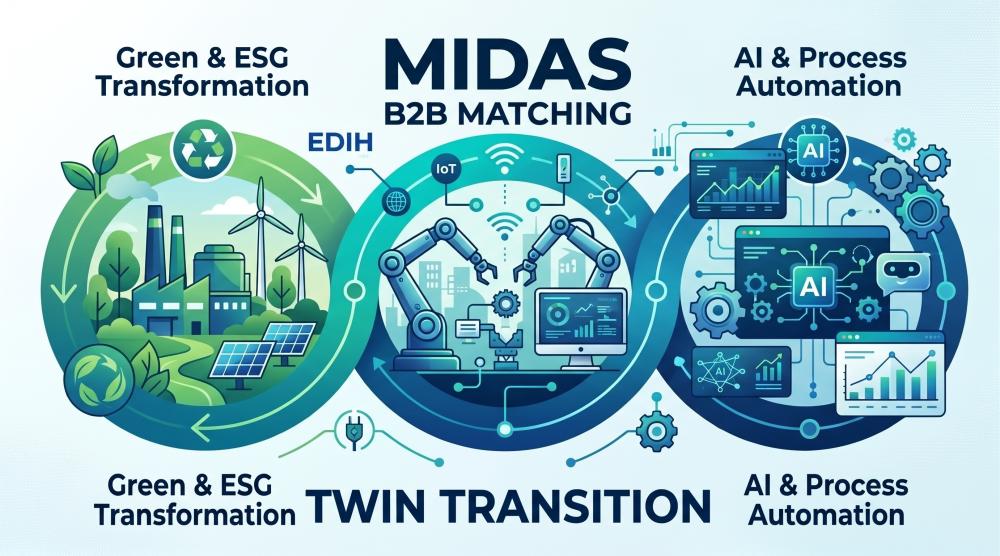
In today’s rapidly changing competitive landscape, future production relies heavily on material versatility, design freedom, and manufacturing agility. As industrial demands grow increasingly complex, Polymer and Metal Additive Manufacturing (AM) have emerged as dual engines driving the transformation of modern manufacturing. Moving far beyond prototyping, these complementary technologies now enable the direct fabrication of high-performance, functional components across aerospace, automotive, energy, and medical sectors. In this context, the MIDAS (Manufacturing Innovation Digital Advancement Services Hub) project, with Sabancı University as a key partner, plays a crucial role in empowering SMEs to adopt both polymer and metal AM solutions for scalable, high-value production.
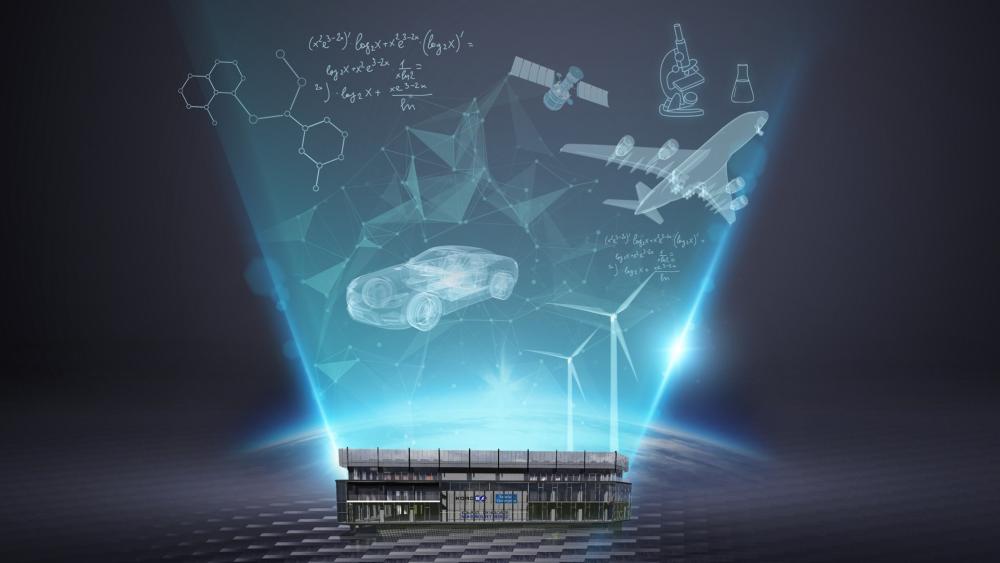
The technological backbone driving this multi-material revolution is the Sabancı University Integrated Manufacturing Technologies Research and Application Center (SU-IMC). Leveraging the advanced capabilities built under the DİMAP (Direct Digital Manufacturing Platform) project, SU-IMC provides an end-to-end industrial platform where SMEs can harness both polymer and metal AM technologies to revolutionize their production lines.
Synergizing Polymer and Metal AM at SU-IMC
Within the framework of the MIDAS project, SU-IMC bridges material science and digital technology to offer SMEs comprehensive manufacturing capabilities across three core pillars:
- Metal Additive Manufacturing for High-Performance Applications: Utilizing advanced metal AM processes—such as Selective Laser Melting (SLM), Hybrid Directed Energy Deposition (Hybrid DED), and Electron Beam Melting (EBM)—SU-IMC enables SMEs to produce complex, high-strength metal components. These technologies dramatically improve material efficiency while maintaining superior thermal and mechanical integrity, providing critical advantages for demanding sectors like aviation, space, automotive, and energy.
- Polymer Additive Manufacturing for Scalability and Design Agility: Through Large-Scale Robotic-based Polymer AM and advanced composite processing, SU-IMC facilitates the rapid, cost-effective production of large structural parts, tooling, and customized components. Polymer AM offers unprecedented design flexibility and shorter lead times, allowing SMEs to innovate rapidly without the burden of expensive, traditional tooling costs.
- Integrated Quality Validation and Digital Integration: Bridging polymer and metal AM requires rigorous quality assurance. SU-IMC combines advanced material characterization (such as SEM and XRD) and non-destructive testing tools (Micro/Nano CT Scanners and Ultrasonic Immersion Systems) with digital twin technologies. This ensures that whether a part is polymer or metal, its internal soundness, microstructural integrity, and mechanical durability strictly conform to global standards.
By integrating both polymer and metal Additive Manufacturing into a unified digital ecosystem, the MIDAS project and SU-IMC (DİMAP) equip manufacturing SMEs with the versatile toolkit necessary for future production. Through this strategic initiative, businesses can optimize material selection, accelerate product development, and secure a resilient, highly competitive position in global supply chains.
Bora Gönül – Robotic Manufacturing Engineer
Burak Bahat – Business Development Engineer