Emerging Trends in Additive Manufacturing: Towards Sustainable and Smart Production
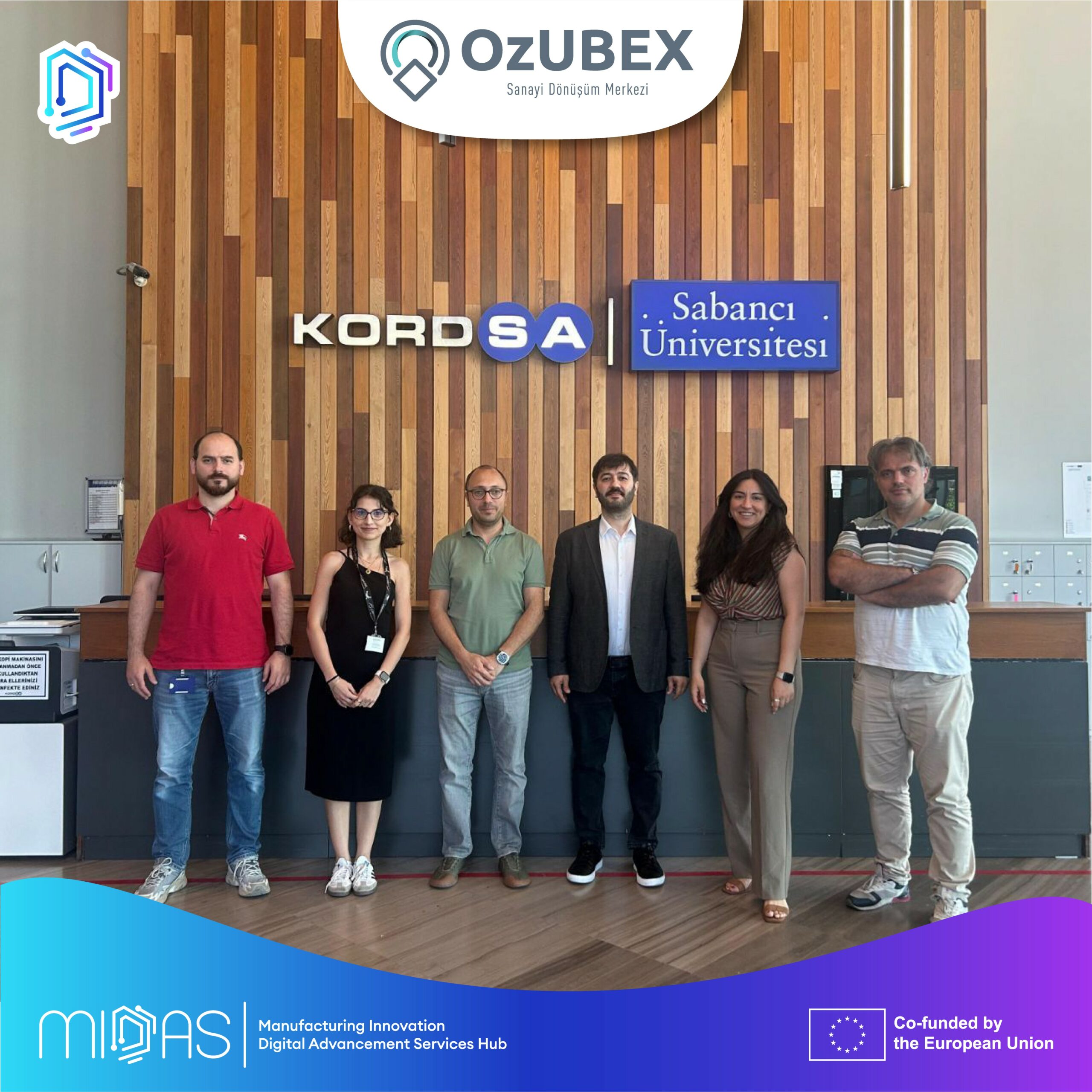
In today’s rapidly changing competitive landscape, Additive Manufacturing (AM) is undergoing a profound evolution, transitioning from a rapid prototyping tool into a core pillar of industrial manufacturing. Today, the global sector is driven by a dual mandate: achieving sustainability through green transformation and embracing smart production via digitalization. In this context, the MIDAS (Manufacturing Innovation Digital Advancement Services Hub) project, with Sabancı University as a key partner, plays a vital role in helping manufacturing SMEs integrate these emerging trends into their business models.
The technological backbone enabling this transition is the Sabancı University Integrated Manufacturing Technologies Research and Application Center (SU-IMC). Through the advanced capabilities developed under the DİMAP (Direct Digital Manufacturing Platform) project, SU-IMC provides the infrastructure and expertise required to guide businesses toward the next generation of eco-friendly and intelligent production.
Driving the Future of Additive Manufacturing at SU-IMC
Within the framework of the MIDAS project, SU-IMC aligns its advanced manufacturing solutions with global trends to offer SMEs sustainable and smart manufacturing capabilities across three main pillars:
Data-Driven Smart Production: By integrating digital technologies such as real-time monitoring, digital twins, and data-driven process optimization, SU-IMC elevates AM from a mechanical process to an intelligent system. Utilizing High-Speed Cameras and Optical 3D Scanners, the platform enables immediate defect detection during production. This significantly minimizes scrap rates, optimizes energy consumption, and ensures zero-defect manufacturing.
Sustainable Materials and Advanced Systems: The shift toward a circular economy requires material efficiency. SU-IMC’s state-of-the-art Electron Beam Melting (EBM) systems allow the efficient creation of high-performance metal alloys under vacuum conditions, maximizing raw material utilization. Furthermore, Cold Spraying systems offer unique capabilities for material deposition, opening new doors for the repair, remanufacturing, and life-extension of industrial components, which dramatically reduces the carbon footprint of manufacturing processes.
Advanced Quality Assurance for Longevity: To achieve true sustainability, manufactured parts must endure extreme conditions. SU-IMC combines advanced post-processing (such as Tube Furnaces for microstructure optimization and CNC Lathe systems) with sophisticated non-destructive testing tools. Technologies like Ultrasonic Immersion Systems and Micro/Nano CT Scanners allow SMEs to comprehensively validate internal material integrity, ensuring long-term product durability and reliability.
By embracing these emerging trends, the MIDAS project and SU-IMC (DİMAP) empower manufacturing SMEs to transition from traditional methods to eco-friendly, intelligent, and highly efficient production models. Through this collaborative approach, the manufacturing sector is successfully navigating the twin transition—digital and green—to secure a resilient and sustainable future on a global scale.